Before continuing, let us explain what we use cookies for. This CaixaBank website collects data on your browsing using its own and third-party cookies, which we analyse to:

  • Improve our website, products and services.
  • Customise the content (e.g., with video recommendations for you).
  • Customise the advertising you see for our products or services.

The content and advertising are personalised using a profile of you created from your browsing data (for example, what sections of our site you visit). You can find out more about how we use cookies in our Cookie Policy.

Set up cookies
Reject
Accept
  • Personal Banking
  • Business Banking
  • EN
    Spanish language. Press to change

    Spanish language. Press to change

    Close
    • Spanish
    • Català
    • Euskera
    • Galego
    • Valencià
    • Deutsch
    • English
    • Français
Open account

CaixaBank (Go to home)

Access Open account

CaixaBank (Go to home)

Open your account Access
 
  • ...Searching!

    Soon we will show results

  • Follow your search

    More results

  • Security
  • Secure income tax return

Income tax season scams

Learn how to spot them and protect yourself.

Pause / Resume

Income tax season scams

Learn how to spot them and protect yourself.

How scammers operate during tax season

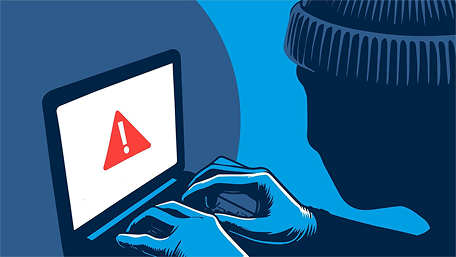
Every year, during income tax season, digital fraud attempts increase.

Cybercriminals impersonate official bodies, such as the Tax Agency, to gain the victim’s trust and obtain personal or banking information.

They act with precision: they know the calendar, mimic real messages, and create urgency to make you act without thinking. Recognising these patterns is the first step to protecting yourself.


What are the most common tactics used by cybercriminals?

Fake emails, SMS and calls

They pretend to be official communications with subjects like “Refund available” or “Issue with your tax return”. These include links to fraudulent websites. They may also contact you by phone to offer supposed services such as managing prior appointments or procedures related to your tax return.

Promises of immediate refunds

These fake sites ask for personal and banking details, such as card information. Once entered, scammers will use this information to steal your money or impersonate you.

False error or penalty notifications

Intimidating alerts are used to create alarm, pushing you to act quickly without verifying. They often refer to supposed problems with the tax return, possible penalties, or pending notifications.

Malware attachments

Some emails include documents that, when opened, install malicious software without your knowledge.

Tips to identify income tax scams

  • They ask for personal or banking information via email, SMS, or phone calls.
  • Be wary if the communication pressures or frightens you, or if it promises an immediate benefit, such as avoiding a penalty or receiving an unexpected refund.
  • Make sure to look at the sender: In SMS messages, the name AEAT may appear and email domains very similar to the official one (for example, @agenciatributaria-gob.com) may be used.
  • If contact is made by email or SMS, it is usually generic and does not address you by name.

How to protect yourself during tax season

  • Always access the official Tax Agency website.
  • Don't trust links received by SMS or email; verify the website address.
  • Also be wary of calls offering to handle Agencia Tributaria procedures that you have not requested.
  • Never share passwords or personal or banking information through unverified channels.
  • Be suspicious of messages that convey a sense of urgency. Haste is one of fraud's main allies.
  • Keep your operating system and apps updated. New versions fix security flaws.
  • Enable two-factor authentication whenever possible to make logging in more secure.

Your best defence is to pause before acting

Use critical thinking, pause when something does not feel right, and, in case of doubt, always verify the information through official channels.

If you think you may be a victim of a scam, act quickly.


Scams often disguise themselves as urgent situations or threats. Be especially wary of any urgent requests for details or payments.


Keep calm, use your common sense, and if you think you might be a victim of fraud, get in touch with CaixaBank immediately through the official channels: Adviser Space or by calling +34 93 887 25 25 or 900 40 40 90.

Call

Do you think you've been the victim of fraud?

Call
    • Contact us Got a question? We’re here to help you.
    • Customer support Access to submit an official complaint.
    • Online banking From your computer or your phone.
    • Set an appointment Through the CaixaBank app or website.
  • Products

    • HolaBank Account
    • HolaBank Cards
    • HolaBank Mortgage
    • Interest-bearing Deposit
    • Insurance
  • It may interest you

    • Digital Banking
    • HolaBank Club (Opens in a new window)
    • Sustainable products
  • Corporate information

    • Corporate website (Opens in a new window)
    • CaixaBank Research (Opens in a new window)
    • Awards and acknowledgements (Opens in a new window)
    • Headlines
    • Sustainability (Opens in a new window)
    • Work with us (Opens in a new window)
    • Accessibility
    • CAS
    • CA
    • ENG
    • FRA
    • DEU
    • VAL
    • EUS
    • GAL

© CaixaBank, S.A. 2026

  • Cookies policy
  • Privacy
  • Legal notice
  • Interest rates and information
  • MIFID
  • Legal information about CaixaBank, S.A.
  • Sello de Excelencia EFQM (Abre en ventana nueva)
  • Western Europe
  • Banco más innovador (Abre en ventana nueva)
  • Certificación ISO
  • AQmetrix